

 Dec 29, 2025
 3 min read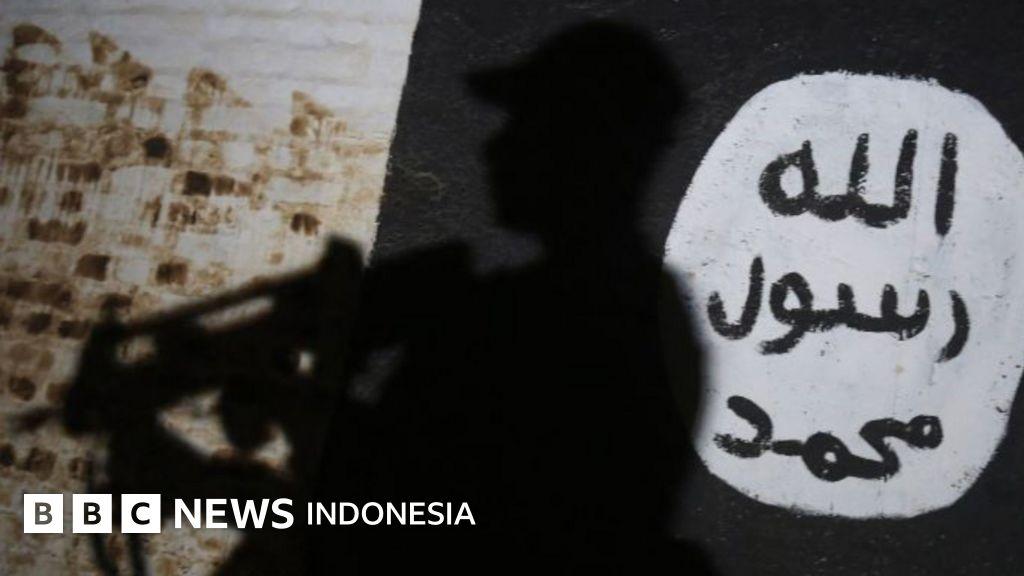
The Bondi Beach shooting on December 14 brought the Islamic State (ISIS) group to the fore.Australian Prime Minister Anthony Albanese claimed the perpetrators were inspired by the ideology of the "Islamic State (ISIS)" in the killing of 15 people.
Will the Islamic State group, also known as ISIS, rise again?
- Authors, Katherine Heathwood and Fernando Dorte
- Stock, World Service
- Writer, supervision
- Stock, Jihadist Media Insight Group
- Reading time: 8 minutes
On Thursday, December 25, 2025, the United States launched an offensive against militias linked to the Islamic State group (ISIS) in northwestern Nigeria.
The U.S. military said a camp run by the group near the border with Niger was attacked. The death toll was unclear, but U.S. and Nigerian officials said several militants were killed.
US President Donald Trump called the Christmas Day attack "deadly" and called the group "terrorist scum."Trump also claimed that the militia group had "brutally attacked and killed mostly innocent Christians."
U.S. Defense Secretary Pete Hegers said he was "grateful to the Nigerian government for its support and cooperation."
The Pentagon later posted a short video showing the missile being launched from the ship.
Nigerian Foreign Minister Yusuf Maitama Tuggar called the attack a "joint operation" and had "no connection to any particular religion".
Tugar said the attack had been planned "for some time" using information provided by Nigeria.
Speaking about the timing of Thursday night's attack, Tuggar insisted the attack had "nothing to do with Christmas".
The attack on the ISIS group in Nigeria comes less than two weeks after the Dec. 14 shooting in Bondi Beach, Australia.
Australian Prime Minister Anthony Albanese said the attackers appeared to have been motivated by the ideology of the "Islamic State (ISIS)" after the attack, which left 15 people dead. Australian police found the Isis banner and a home bomb in a vehicle in the crime scene.
A father and his son have been identified as the suspected attackers.Police shot the father dead, while the son was charged with 15 counts of murder.
ISIS commented on the attack in its weekly newspaper, al-Naba.The group used language that suggested they claimed to have inspired acts of violence through online messages, but did not directly plan them.
The Sydney attack is a reminder that ISIS has not stopped organizing or instigating attacks against Western countries, but its influence has waned significantly since 2017, when the caliphate's strongholds in Syria and Iraq collapsed.
"We can't talk about the return of something that never really disappeared," said Mina al-Lami, an expert on jihadism at Nitor.
He warned that the public should not rush to label the attacks as ISIS operations, as doing so risks boosting the group's propaganda rather than reflecting its true capabilities.
Is ISIS still active?
At the height of its glory, ISIS controlled large areas of Syria and Iraq.
However, its territory was taken over in 2019 by a US-led coalition of more than 70 countries.
Al-Lami said the loss of its founder, Abu Bakr al-Baghdadi, who was killed in a US strike in 2019, further weakened the group's appeal.Since then, none of its leaders have had a recognized personality or public profile.
According to the UN Security Council, there are currently around 3,000 members of ISIS in Syria and Iraq.
Indeed, tens of thousands of foreign fighters have flocked to join the group since it declared its caliphate in 2014.
Al Lami said another sign of IS's weak power was the scale of its attacks.
The group was responsible for several major attacks in Syria, Iraq and the West in the mid-2010s.
"They are now relying on small, quick movements," he said.
As for the Western attacks, most are "inspired" by ISIS and not centrally coordinated.
Last year, the Afghan branch of ISIS, known as ISIS in Khorasan Province (ISKP), made global headlines with a deadly attack in Iran in January that killed nearly 100 people.Two months later there were attacks in Russia that killed almost 150 people.
It is also written in the Fan Thousand Thiefs in Europs, Most of them have Happed.
However, this year ISKP has weakened a lot and it is difficult to carry out attacks even in Afghanistan.
Many attacks carried out in the name of ISIS have taken place in sub-Saharan Africa.
According to the Global Terrorism Index 2025 report, published by the Institute for Economics and Peace, ISIS and its affiliates "remained the deadliest terrorist organization in 2024, causing 1,805 deaths in 22 countries."
Allami added that ISIS has lost much of its propaganda power.
"They have sophisticated, sophisticated propaganda videos, and now they're really having trouble making videos."
However, ISIS continues to instigate attacks through its online media.
In-depth Indonesian news coverage right on your WhatsApp.
Click here
The end of WhatsApp
Al-Lami said ISIS is unique because it has "an army of young, social media-savvy online supporters who help fill the gaps left by the group's propaganda."
They want to reach the youth on platforms like Facebook and Instagram.
Monitoring experts often find "step-by-step instructions" on how to use a gun, how to shoot, and how to stab someone to death.
Al-Lami suspects that some of these posts were made by experienced "members of the jihadist media," but estimates that some were "ordinary young people who were influenced by ISIS propaganda and helped the group spread its message."
In its comments after the Bondi attack, ISIS claimed that the "jihad" was now "entering a more difficult and complex phase", which is increasingly being played out online.
"The strategy of accepting orders through the digital world... is an effective strategy that does not require a lot of resources and can overcome many obstacles," he said.
Is ISIS expanding in Africa and Asia?
ISIS is now looking for an alternative location after losing support in the Middle East.
In South Asia, ISIS Khorasan Province, or ISKP, is considered one of its most powerful branches.
The branch, which is based in Afghanistan and northern Pakistan, estimates the branch has 2,000 members and continues to receive recruits from other Central Asian countries such as Tajikistan and Uzbekistan.
Meanwhile, ISIS's East Asia Province (ISEAP), which spans Southeast Asia and is largely centered in the southern Philippines, has previously been responsible for a series of deadly attacks in the Philippines and Indonesia.
However, this branch has not attacked this year.
Experts say that the main focus of ISIS is Africa.
Adrian Shatouni, a security expert at the Netherlands-based International Center for Counter-Terrorism (ICCT), warned that ISIS has grown rapidly on the continent in recent years.
"They have grown in response to Western military pressure and proposals, regional tensions and reduced funding for counter-terrorism efforts, taking advantage of security opportunities in weakly governed regions such as the Sahel (northern Africa) and West Africa."
According to the UN, ISIS may have between 8,000 and 12,000 members in the West Africa Province (ISWAP).Nine of the group's 10 attacks this year took place in sub-Saharan Africa, al-Lami said.
He said ISIS has a strong presence in the Sahel region and Somalia, where it rivals the most powerful branch of al-Qaeda.
However, according to him, the group is strongest in Nigeria, Democratic Republic of Congo (DRC) and Mozambique.
In these countries, armed groups often target Christian communities as well as military forces.
He said that in the Democratic Republic of Congo, Islamic State-affiliated groups are trying to impose taxes on non-Muslims in areas frequently attacked.
"ISIS says that Christians in the DRC have three options: convert to Islam, pay taxes to be recognized as a tribute to ISIS, or be killed. In most cases, they (militia) don't give them options. They just attack their villages and kill them," he added.
Al-Lami said ISIS was allowed to operate without much oversight in Africa due to a lack of global media attention – something the group itself has complained about.
“Last year, ISIS was desperate.They said in an official statement."We have killed all the Christians in Africa and the Western media is racist.They don't care," he said.
But while IS is most active in Africa, al-Lami said its strength is "nowhere near" what it once had in Syria and Iraq.
"In Africa, ISIS doesn't care about land like it did in the Middle East.
Dr. Renad Mansour, a senior fellow at the Chatham House think tank, believes that ISIS is now much weaker.
“Many people living under ISIS are suffering,” he told the BBC.
He added that in places where citizens are disillusioned with the government, "there is not the same push or pull that ISIS has."
"It will be difficult for the Caliphate to grow like this in the near future because those roots no longer exist," he added.
However, he also warned that ISIS has the potential to grow in areas where there are several armed groups competing for power.
Security expert Adrian Shtuni said that the biggest danger lies in how the international community reacts to the threat of ISIS.He warned that the "effective method" after a major attack would not work.Continued pressure from different countries is very important.
"Periodical attention alone is not enough to combat a highly adaptable enemy like ISIS and its evolving tactics," he said, adding, "ISIS thrives on neglect."